Lineolated Parakeet (Linnie) Complete Guide — The Calmest Small Parrot You’ve Never Heard Of

Picture a tiny golden bird perched on your shoulder, perfectly calm, while your puppy snoozes at your feet — and nobody panics, nobody bites, nobody screams. The bird doesn’t flinch. The dog doesn’t lunge. They just coexist, easy as a Sunday morning. That’s life with a Linnie. And once you’ve experienced it, no other small bird quite measures up.

Hey guys, I’m Kalyn, author of The Parrot Bliss Bond and several other parrot books. Over the years I’ve had the joy — and the chaos — of knowing over 30 parrot species up close. I’ve lived with Amazons, Macaws, African Greys, Cockatoos, Caiques, Conures, Parrotlets, Ringnecks, Pionus, and more. And after all that? The bird I keep breeding, keep expanding my flock with, and keep falling more in love with? The Lineolated Parakeet — the Linnie.

Before we dive in, watch this short video where you’ll meet Kiki, one of my yellow Linnies. She explains everything just by sitting there being her gorgeous, mellow self. 🦜

👆 Check out more on my @ParrotBliss YouTube channel!

🐣 Baby Linnies available now!


TL;DR: Lineolated Parakeet at a Glance

  • Species: Lineolated Parakeet (Bolborhynchus lineola), also called Barred Parakeet or Catherine Parakeet
  • Size: 6–7 inches long, 47–55 grams
  • Lifespan: 10–15+ years in captivity with good care
  • Voice: Quiet and soft — one of the quietest parrots. A flock is louder, but a single bird is very apartment-friendly.
  • Diet: Pellets, seeds, fresh vegetables, fruit, and grains
  • Companionship: Bonds deeply with people when handfed; does beautifully in pairs or small flocks; gentle with other species
  • Best for: First-time bird owners, apartment dwellers, families, or anyone who wants a parrot that actually chills out

What Is a Lineolated Parakeet, Really?

Most people have never heard of them — and that’s the wild part, because Linnies are spectacular. They’re native to the cloud forests and highlands of Central and South America, ranging from southern Mexico all the way down through Colombia, Venezuela, Peru, and Bolivia. In the wild they live in small flocks, moving quietly through the canopy, which explains a lot about their personality: they’re flock-oriented, calm, and not inclined toward loud drama.

The name “Lineolated” comes from the Latin for “lined” — referring to the dark barring that most Linnies wear like little zebra stripes across their green feathers. They’re also called Barred Parakeets for exactly that reason. But here’s something that surprises people: Linnies come in a stunning rainbow of color mutations. Green is the wild type, but breeders have developed blue, cobalt, turquoise, white, silver, lutino, and — my personal favorite — yellow. Yes, a tiny golden parrot that looks like living sunshine.

One of the most distinctive things about Linnies that people notice right away is how they move. They don’t perch upright the way most parrots do. They rest in a more horizontal posture, almost like a little barrel with wings, and they walk with a deliberate, rocking gait that is absolutely charming. People often describe it as the way they imagine a tiny dinosaur would walk. Once you see it, you’ll never stop smiling at it.

Here’s the other thing: Linnies are often overlooked in pet stores. They sit quietly, they don’t call out to you, they don’t make a show of themselves. People walk right past them to get to the louder, flashier birds. That, Kalyn will tell you, is a tremendous missed opportunity.


Meet Kiki: My Linnie

Let me tell you about Kiki — full name Kipuka, though she mostly goes by Kiki. She’s one of my yellow Linnies, and she is, without question, one of the most serene creatures I have ever shared a home with.

Kiki is probably a female — I say “probably” because Linnies are not visually sexable in most color mutations. You’d need a DNA test to know for sure, and I haven’t gotten around to it. What I do know is that she has this gorgeous butter-yellow coloring with almost no visible barring, which is unusual. Most Linnies have those little black zebra stripes across their feathers, just like a budgie. Kiki’s are so faint you have to look hard to see them. She’s just this smooth, luminous golden bird.

Kiki has a male buddy, and he’s the talker of the pair. He says things — little sounds, fragments of words — and when I watch the two of them together, it really does seem like Kiki is learning from him, picking things up, doing her best impression. I love that about Linnies: they soak up their environment. Their social intelligence is quiet but real.

But the moment I love to tell people about? Kiki hanging out with my puppy. I know, I know — a tiny bird and a dog sounds like a disaster waiting to happen. But Kiki was completely unbothered. She sat on my arm while the puppy sniffed around, and the puppy — bless him — actually leaned in and gave her a little kiss. And Kiki just took it. Didn’t bite, didn’t flap, didn’t lose her mind. Just sat there, dignified as a queen.

That’s Kiki. That’s the Linnie temperament.

I want to be clear: Kiki is on the exceptionally mellow end of the Linnie spectrum. Not every Linnie will be quite so laid-back. But even my more active Linnies — and I have nine of them in a little aviary — have that same fundamental sweetness. They don’t pick fights. They don’t bully. They just live their little birdie lives with this wonderful peaceful energy.


Linnie Temperament: What People Fall In Love With (and What to Be Ready For)

Three Things People Fall In Love With

1. The calm. Linnies are genuinely one of the most laid-back small parrots available. They don’t vibrate with nervous energy the way some birds do. They’re content to hang out on your shoulder, explore at their own pace, or just sit with you while you work. If you’ve ever wanted a parrot that actually relaxes — Linnies are it.

2. The gentleness. Linnies very rarely bite hard. They don’t go out of their way to start trouble with other birds or animals. They’re friendly, especially when they’ve been handfed and socialized from an early age. That makes them wonderful for families, for first-time bird owners, and for multi-pet households.

3. The quiet. One Linnie is remarkably soft-spoken. They make sweet, gentle chirping sounds that are pleasant to live with rather than piercing. If you’re in an apartment, or if you share walls with neighbors who might not share your enthusiasm for birds — a Linnie is a gift. (Fair warning: an aviary of nine? They do get a bit more vocal together. But even then, we’re not talking conure-level chaos.)

Three Things to Be Ready For

1. The invisibility problem. Linnies are easy to overlook in a store because they don’t perform for you. They need an owner who will actually seek them out, do the research, and appreciate what they are. If you get a Linnie expecting a bird that will entertain you with acrobatics and constant noise, you’ll miss the gift entirely.

2. Time and bonding. Time is the magical ingredient with every parrot — and Linnies are no exception. The more time you invest in handling, socializing, and just being present with your Linnie, the more deeply they bond with you. A neglected Linnie is a sad Linnie. They want connection.

3. Sex is a mystery until it isn’t. In most color mutations, you cannot tell a male from a female by looking at them. If you want a bonded pair and are hoping for babies, you’ll need DNA sexing. Don’t make the mistake of assuming — I’ve been surprised before!


What to Feed Your Linnie

Linnies thrive on variety. A bird eating only seeds is like a person living on crackers — technically surviving, but not thriving. Here’s what my Linnies’ daily plate looks like:

  • High-quality pellets (small size, appropriate for parakeets) — 40–50% of the diet
  • Fresh vegetables — leafy greens (kale, chard, romaine), broccoli, bell pepper, carrot, squash, cooked sweet potato. Daily if possible.
  • Fresh fruit — small amounts of apple, blueberry, mango, pomegranate. Think of fruit as a treat, not a staple.
  • Grains and cooked foods — quinoa, brown rice, cooked lentils, sprouted seeds. These are nutrient-dense and Linnies love them.
  • Seeds — a small amount of a quality seed mix is fine, but seeds alone are not a complete diet.
  • Always fresh water — changed daily, every day, no exceptions.

Please remember, I’m not a veterinarian or a nutritionist — this is what works in my flock. Always consult an avian vet for guidance specific to your bird.

Foods to avoid: avocado, chocolate, onion, garlic, caffeine, alcohol, and anything with artificial sweeteners. These are toxic to birds. And skip the heavily processed “people food” — your Linnie deserves better.


Housing Your Linnie: Cage, Space, and Enrichment

Linnies are small, but they still need room to move. Here’s what I recommend as a minimum — and remember, bigger is always better.

  • Minimum cage size: 18″ x 18″ x 24″ for a single bird. For a pair, go larger — at least 24″ x 24″ x 36″.
  • Bar spacing: 3/8″ to 1/2″ — this is critical. Anything wider and a Linnie can get their head stuck, which can be fatal.
  • Perch variety: Natural wood perches of varying diameters keep their feet healthy. Add a rope perch and a flat perch for sleeping.
  • Out-of-cage time: Aim for at least 1–2 hours of supervised out-of-cage time daily. Linnies need to stretch, explore, and interact with you.
  • Enrichment: Foraging toys, shreddable toys, foot toys, and swings. Rotate them so the cage stays interesting. Linnies are intelligent — they get bored with the same setup.
  • Location: A room where the family spends time, but away from the kitchen (cooking fumes, especially from non-stick cookware, are deadly to birds).

Don’t make the bird pay for a setup mistake. If the bar spacing is wrong, if the cage is too small, if the perches are the wrong size — fix it. Your Linnie can’t fix it for themselves.


Socialization and Companionship: One Bird or Two?

Here’s the honest answer: Linnies are flock birds at heart, and they are happier with a companion. A bonded pair will play together, preen each other, keep each other company when you’re away, and generally live a fuller birdie life. I keep mine in an aviary together, and watching them interact is one of my great daily joys.

That said, a single Linnie who receives generous daily attention from their human can absolutely thrive. If you’re getting one bird and you work from home, or you have lots of time to spend with your bird, a solo Linnie can bond deeply with you in a way that a bird with a companion sometimes doesn’t — because you become their flock.

What doesn’t work: a single Linnie who is left alone for long hours, day after day, with little interaction. That’s a recipe for loneliness, feather-destructive behavior, and a sad little bird who never reaches their full potential. If your schedule is demanding, please do your Linnie the kindness of getting them a companion.

Linnies also tend to coexist beautifully with other gentle species when properly introduced — as Kiki demonstrated with my puppy, they don’t come out swinging. But always supervise interspecies interactions, and never house predatory animals with birds unsupervised.


Linnie vs. Similar Species: A Quick Comparison

Linnie vs. Budgie (Parakeet): Both are small, colorful, and charming, and both have that striped/barred look. But Linnies have a more parrot-like beak, a stockier body, a slightly longer tail, and that signature horizontal posture. Budgies tend to be better mimics of individual words; Linnies are quieter and even more laid-back. If you want maximum chatter, go budgie. If you want maximum chill, go Linnie.

Linnie vs. Parrotlet: Similar in size, but very different in personality. Parrotlets are known for being feisty — they have big personalities stuffed into tiny bodies and can be quite territorial. Linnies are gentler, more easygoing, and less likely to bluff or bite. A Parrotlet is a firecracker; a Linnie is a warm ember.

Linnie vs. Green Cheek Conure: Green Cheeks are about 10 grams heavier than Linnies and noticeably louder (though they’re still considered quieter among conures). Green Cheeks are more acrobatic and playfully mischievous. Linnies are calmer and quieter. Both are wonderful — it really comes down to whether you want more entertainment or more peace.


Common Questions About Lineolated Parakeets

Are Linnies good for first-time bird owners?
Yes — they’re one of my top recommendations for first-timers. Their calm temperament and gentle bites (when they bite at all) make the learning curve much more forgiving. They’re still parrots with real needs, but they’re not going to scream the apartment down while you figure things out.

Do Linnies talk?
Some do! They’re not in the same league as Amazons or African Greys, but Linnies can pick up words and sounds, especially when kept with other birds that vocalize. My male Linnie says things regularly, and Kiki seems to be doing her best impression. Don’t expect a full conversation, but do expect some very sweet attempts.

Can a Linnie live alone?
Yes, with a committed owner who provides lots of daily interaction. If you’re home often and will genuinely spend time with your bird, a solo Linnie can thrive and bond very closely with you. If your life is busy, please get two.

Are Linnies noisy?
A single Linnie is one of the quietest parrots you can own — their sounds are soft, pleasant chirps. A flock, like my aviary of nine, does get louder, but even then the sound level is nothing like larger or more vocal species. They’re a great fit for apartments and condos.

How do I know if my Linnie is male or female?
In most color mutations, you can’t tell visually — not reliably. You’ll need a DNA test, which is simple and inexpensive (a feather or blood sample sent to a lab). If breeding is something you’re interested in, DNA sexing is essential. Don’t guess!

How long do Linnies live?
With proper diet, veterinary care, and a safe environment, Linnies typically live 10–15+ years. They’re a long-term commitment — which is exactly how I think about every bird I bring into my home.


Lineolated Parakeet (Bolborhynchus lineola), also called the Barred Parakeet or Catherine Parakeet. A small, stocky South American parrot native to cloud forests from Mexico through Bolivia, known for its remarkably calm temperament, distinctive horizontal resting posture, quiet voice, and gentle nature. One of the most apartment-friendly and beginner-friendly parrots in the world.


Linnie Quick-Start Checklist

  • ✅ Cage at least 18″x18″x24″ with bar spacing no wider than 1/2 inch
  • ✅ Natural wood perches in varying diameters, plus rope and flat perch options
  • ✅ High-quality small pellets as the dietary foundation
  • ✅ Fresh vegetables offered daily or near-daily
  • ✅ Foraging and shreddable toys rotated regularly
  • ✅ A committed avian vet located before you bring your bird home — not after
  • ✅ Daily out-of-cage time and genuine interaction with you

My parrots are my bliss — and the Linnies have earned a very special place in my heart and in my aviary. After more than 30 species, I keep choosing them, keep breeding them, keep watching people fall in love with them the moment they really stop and pay attention. There’s something almost magical about a bird that quiet, that peaceful, that perfectly itself.

If you’re ready to bring a Linnie home, please buy from someone who can show you the parents, the aviary, and the babies before the sale. I breed Linnies here at Parrot Bliss, and I’d love to help match you with your new little feathered soul. Visit my Available Parrots page to see who’s looking for a home.

Time is the magical ingredient with every parrot — and a Linnie will reward every moment you give them.

Catch you next time. 🦜
Hahn’s Macaw Care Guide: The Big-Macaw Personality in a Mini Body

If you’ve ever watched a full-sized Blue & Gold or Greenwing Macaw fill a living room and thought, I love that, but I don’t quite have a ballroom, you are exactly the person the Hahn’s Macaw was built for. She’s the smallest member of the macaw family — a pocket-sized macaw with the voice, personality, and mischief of birds three or four times her size.

Hey guys, I’m Kalyn, author of The Parrot Bliss Bond. I’ve shared my home with 22+ parrot species, and my Hahn’s Macaw, Emerald, is one of the birds people ask me about more than any other. Watch this and you’ll see why — and then I’ll walk you through what it actually takes to give a Hahn’s a great life.

TL;DR: The Hahn’s Macaw at a Glance

  • Species: Diopsittaca nobilis — also called the Red-Shouldered Macaw or Red-Breasted Macaw.
  • Size: the smallest macaw — about 12–14 inches long, roughly 150 grams.
  • Lifespan: 30–40 years with good care.
  • Talker: yes — keeps the full talking ability of the big macaws in a mini package, and females talk too.
  • Voice: can be loud and repetitive when frustrated. Plan for it.
  • Companionship: extremely social. Strongly consider getting two.

What Is a Hahn’s Macaw, Really?

The Hahn’s Macaw is the smallest species in the macaw family. Where a full-sized macaw can hit 1,000 grams — that’s around two pounds of bird with a beak that could go through your finger — a Hahn’s is closer to 150 grams and about the length of a conure. That’s where the nicknames mini macaw and dwarf macaw come from. Scientifically she is Diopsittaca nobilis, and “Red-Shouldered Macaw” is the other name you’ll see in bird books because of the red patch on her shoulders and wing bend.

If you want the short species profile, I keep one at the Hahn’s Macaw species info page. This post is the full, lived-in version — what it’s like to actually live with one.

Meet Emerald: My Hahn’s Macaw

Emerald came to me as a surrender. Her previous owner had become sick and could no longer care for her, and she landed in my flock after eleven years in a home with no other animals. That one detail explains almost everything about her early days with us — she was a “person parrot,” not a “bird parrot.” She didn’t know how to interact with other birds. She bonded to humans. And when humans left the room, she screamed.

Two and a half years later, she is a very different bird. She’s still the same sweet, affectionate Emerald, but she’s less bitey, she’s settled, and she actively looks for connection rather than demanding it. That turnaround is what gave me the perspective I want to share here — because the biggest decisions you make around a Hahn’s happen in the first year.

Hahn’s Macaw Temperament: What She’s Actually Like

Three things people fall in love with when they meet a Hahn’s:

  1. She talks like a macaw. A Hahn’s keeps the full talking ability of the big macaws, and females talk too. Emerald picks up words, phrases, and sounds. If you want a conversational parrot without giant-macaw logistics, she delivers.
  2. The size is a dream. You can carry her on your shoulder without bracing for a wrist injury. She can nibble affectionately without doing damage. She fits into a normal living room, a normal cage, a normal life.
  3. She’s socially oriented. Macaws as a family are flock birds, and Hahn’s are no exception. When she’s bonded, she wants to be with you — petting, playing, “helping” you with everything you’re trying to do.

And three things to be ready for:

  • Squawking. Hahn’s can be loud, and the squawk tends to be monotonous and repetitive. Emerald will do the same squawk-squawk in a sequence until whatever triggered it resolves. It is usually a communication problem — she feels un-included. Fix the cause and the squawking fades.
  • Bitey phases. Especially in a new home or an insecure moment. It almost always improves with time, patience, and the right setup. Coercion makes it worse.
  • The “boomerang.” She may fly or climb right back onto your hand the moment you try to set her down. That’s affectionate but it’s also real — plan your schedule accordingly.

Hahn’s Macaw Diet: What Actually Works

This is Emerald’s daily plate — built over years of watching what keeps my Hahn’s in feather and at a healthy weight:

  • Pellet base. I use ZuPreem Sensible Seed / Pellet — sometimes called a maintenance pellet. This is the largest part of her diet.
  • Fresh vegetables, daily. Leafy greens, chopped carrots, sweet potato, broccoli. I leave them in for a window long enough for her to eat, then remove before bacteria takes over.
  • A small amount of seed-and-nut mix. About a teaspoon of a macaw-style mix. That’s a full day’s allotment, not a bowl.
  • Seeds and nuts as treats, not staples. This is one of the most important distinctions. A Hahn’s does not need the nut volume a Greenwing or Blue & Gold needs — she’s much smaller. A high-fat diet catches up with a small macaw fast.
  • Fruit in moderation. A bite of apple or papaya now and then. Not a daily fruit bowl.

Please remember, I’m not a veterinarian or a nutritionist. This is what works in my flock. Any parrot with a medical question belongs in front of an avian vet, not a YouTube channel.

Hahn’s Macaw Housing: Cage and Out-of-Cage Time

For a single Hahn’s, plan on a cage at least 36 inches wide, 36 inches deep, and 36 inches high, with bar spacing of 1/2 to 3/4 inch. Bigger is always better. Inside the cage:

  • Natural wood perches in several diameters. A macaw’s feet need variety.
  • Sturdy, destructible toys. Hahn’s chew like their bigger cousins — she needs real things to demolish.
  • Foraging opportunities: hide food inside shreddable paper or toys so she has to work.
  • A quiet corner or hiding spot for retreat.

Out-of-cage time is not optional for this species. Target at least a few hours a day out — on a play gym, on your shoulder, in the room with you. A Hahn’s locked in a cage while the household carries on is a Hahn’s who will scream. Don’t make the bird pay for a setup mistake.

Should You Get One Hahn’s or Two?

This is the single biggest question I get asked about Hahn’s, and here is the honest answer from my own experience: if you will not be home with the bird most of the day, seriously consider getting two.

A Hahn’s is wired to be in a flock 24/7. When she’s alone for long stretches, the frustration comes out as squawking. Squawking becomes a habit. Habits escalate into plucking, which is extremely hard to reverse once it sets in. Emerald came to me as a plucker on her back — a leftover from eleven years alone. She is happier now, but the plucking is still there, and it doesn’t fully go away.

If you don’t want breeding, get two of the same gender. They’ll bond with each other and with you as long as you put the time in. And when you’re at work, they won’t be alone.

One more path worth considering: you can still start with one bird if you’re truly home most of the day. But you have to show up for her — at least an hour of focused interaction, plus background presence while you work from the same room. Hahn’s are not a bird you leave alone in a spare room.

Hahn’s vs Other Small Parrots: Quick Comparison

  • Hahn’s vs Full-size Macaw: Same talking ability and personality, much smaller body. Less messy, less loud overall, far less space. Trade-off is a slightly more neurotic-leaning personality if needs aren’t met.
  • Hahn’s vs Conure (e.g., Sun or Green-cheek): Similar size. Hahn’s talks better, has macaw temperament. Conures tend to be more play-driven. Hahn’s costs more.
  • Hahn’s vs Eclectus: Eclectus is quieter, fussier on diet, less physical. Hahn’s is more interactive, more physical, more demanding socially. I’ve written about that comparison in “Would I Add Eclectus Parrots Or Hahn’s Macaws To My Flock?” if you want the deeper dive.

Common Questions About Hahn’s Macaws

Q: How loud is a Hahn’s Macaw?
Louder than a Linnie or a budgie, quieter than a full-sized macaw. Expect regular vocalizations and a repetitive squawk when she’s frustrated or lonely. Not a good apartment bird unless your neighbors are understanding and you’ve set up for companionship.

Q: Do Hahn’s Macaws talk?
Yes, and well. They keep the full talking ability of the macaw family in a smaller body. Both males and females talk.

Q: How long do Hahn’s Macaws live?
30 to 40 years with good care, sometimes longer. This is a decades-long commitment, not a casual pet.

Q: Are Hahn’s Macaws good for beginners?
They can be, if the “beginner” is ready for a real parrot — daily interaction, careful diet, and years of patient training. They’re a big step up from a budgie or cockatiel in commitment.

Q: Can I keep one Hahn’s Macaw alone?
You can, but only if you are home most of the day and willing to put in focused time. If you work full-time away from home, two is the kinder choice.

Q: What should I feed a Hahn’s Macaw?
Pellets as the base, fresh vegetables daily, a small measured amount of seed-and-nut mix, and nuts or seeds as occasional treats. Hahn’s do not need the nut volume big macaws need.

Key Term

Hahn’s Macaw: Diopsittaca nobilis, also called the Red-Shouldered Macaw or Red-Breasted Macaw. The smallest member of the macaw family, approximately 12–14 inches long and 150 grams, with a 30–40 year lifespan and the talking and social temperament of the larger macaws.

Hahn’s Macaw Quick-Start Checklist

  • Cage at minimum 36″ × 36″ × 36″ with ½″–¾″ bar spacing.
  • At least a few hours of out-of-cage time every day.
  • Pellet base + daily fresh veggies + measured seed/nut mix.
  • Sturdy destructible toys rotated weekly.
  • A plan for companionship — either a second bird of the same gender or a household that’s home most of the day.
  • An avian vet on speed dial and a wellness visit in the first month.

Thinking About Adding a Hahn’s to Your Flock?

My parrots are my bliss, and Hahn’s like Emerald hold a special place in this flock. They really do have the personality of a big macaw in a body you can live with — but only if you set them up right from day one. Time is the magical ingredient with every parrot I’ve ever raised, and Hahn’s are no exception.

If you’re looking for a Hahn’s baby, I’m currently raising some — see the current Hahn’s Babies listing for availability, or reach out through the Available Parrots page if you’d like me to connect you with a breeder friend I trust. Please buy from someone who will show you the parents, the aviary, and the baby’s weaning progress before the sale.

More on the birds themselves — temperament, size, and what living with one is actually like — on my Hahn’s Macaw page. If you’d rather have the day-to-day reference version of all this, the Hahn’s Macaw care sheet runs through housing, diet, health and sleep in order.

Catch you next time.

The #1 Reason Parrotlets Don’t Thrive (And How to Fix It!)

Parrotlets: Small Parrots with Big Needs

Parrotlets may be tiny, but they have huge personalities! These little parrots are often underestimated because of their small size, but they require just as much care, attention, and understanding as their larger cousins. Whether you already have a Parrotlet or are thinking about getting one, it’s important to recognize what makes them unique and how to ensure they thrive in your care.

The Big Personality Trap

One of the biggest mistakes people make with Parrotlets is misjudging their personality. Their confident, bold nature makes them seem independent, but in reality, they are highly social birds that need companionship. In the wild, small parrots like Parrotlets don’t live alone—they form flocks for safety and social interaction. Yet, there’s a persistent myth that they should be kept by themselves. This couldn’t be further from the truth! A lonely Parrotlet can become anxious, depressed, or even aggressive. If you’re considering getting one, think about whether you can provide enough interaction—or, even better, consider getting a pair.

Common Diet Mistakes

Another area where Parrotlet owners sometimes go wrong is diet. Many people love to spoil their birds with fruit, assuming it’s a natural and healthy choice. However, in the wild, most Parrotlets don’t eat much fruit—at least not ripe, sugary fruit. Why? Because larger birds and other animals claim the best fruit first, leaving smaller birds to eat unripe or less desirable foods. Their bodies aren’t adapted to a fruit-heavy diet. Instead, they need a variety of fresh vegetables, quality pellets, seeds in moderation, and occasional protein sources like cooked eggs.

Overwhelming a New Parrotlet

New owners often fall in love with their baby Parrotlet and want to spend all their time with it. But sometimes, too much handling can be overwhelming. Imagine being taken away from your flock and constantly handled by a giant creature—you’d be stressed too! Giving your Parrotlet time to settle in, establishing a gentle routine, and respecting their need for rest will help build trust.

Owning a Parrotlet is a joy, but it comes with responsibilities. By understanding their social, dietary, and emotional needs, you can create a happy, healthy life for your feathered friend. These tiny parrots may be small, but their care should never be underestimated!

It is also why I will happily talk you through a pair rather than a single bird. Our available Pacific parrotlets.

Timneh African Grey Parrots

Timneh African Grey Parrots, a smaller variant of their Congo counterparts, are renowned for their intelligence and charming personalities. These captivating birds, native to Western equatorial Africa, possess remarkable cognitive abilities and communication skills that rival those of young children.

Key Takeaways:

  • Timneh African Greys are smaller and darker than Congo African Greys
  • They inhabit rainforests and mangrove areas in Western Africa
  • Their diet consists primarily of seeds, nuts, and fruits
  • These parrots are highly social and form monogamous pairs
  • They possess exceptional cognitive and mimicry abilities

Physical Characteristics

Timneh African Grey Parrots are distinguished by their unique features. These birds typically measure 10-11 inches in length and weigh between 280-360 grams. Their feathers are a darker shade of grey compared to Congo African Greys, with distinctive white scalloping on the head. One of their most striking features is their maroon-colored tail feathers, which set them apart from their Congo cousins. The upper beak of Timneh African Greys is dark horn-colored with a black tip, adding to their distinctive appearance.

Native Habitat and Distribution

These intelligent birds are native to Western equatorial Africa, with a range extending from the Ivory Coast to Western Kenya, Angola, Tanzania, and South Zaire. They’re commonly found in Liberia and the Ivory Coast. Timneh African Greys prefer specific habitats, including:

  • Primary and secondary rainforests
  • Forest edges and clearings
  • Wet lowland forests
  • Mangrove forests along the western coast of Africa

Diet and Foraging Behavior

Timneh African Grey Parrots are primarily herbivorous, with a diet consisting of a variety of plant-based foods. Their typical diet includes:

  • Seeds and nuts, particularly palm nuts
  • Fruits and berries
  • Occasional insects and grubs

These birds are skilled foragers, often seen climbing from branch to branch in the forest canopy in search of food. Interestingly, they sometimes descend to the ground to consume clay and mineral soil, likely as a source of essential nutrients.

Social Behavior and Breeding

Timneh African Greys are highly social birds, often living in large groups in the wild. They’re known to roost in colonies of up to 10,000 individuals, showcasing their gregarious nature. Despite their social tendencies, they can be shy around humans.

When it comes to breeding, these parrots form monogamous, lifelong pair bonds. Their breeding season typically occurs during winter and early spring. Timneh African Greys lay clutches of 2-4 eggs, with both parents actively involved in caring for the chicks until they reach independence at 2-3 years of age.

For successful breeding in captivity, these birds require specific nesting conditions. Suitable nesting boxes should be vertical or horizontal, measuring approximately 18″ x 18″ x 24″, or L-shaped to mimic their natural nesting environments.

Intelligence and Communication

Timneh African Grey Parrots are celebrated for their exceptional cognitive abilities, often compared to those of a 5-year-old child. Their intelligence is evident in their remarkable talking ability, which rivals that of some Amazon parrots.

These birds are skilled mimics, capable of reproducing a wide range of sounds, including:

  • Telephone rings
  • Microwave beeps
  • Car horns
  • Human voices

In their natural habitat, Timneh African Greys use high-pitched screams, whistles, and contact calls for flock communication. Some highly trained individuals have demonstrated the capacity for reasoning and verbal communication, showcasing their impressive cognitive capabilities.

When handled frequently, these parrots can be playful, interactive, and affectionate, making them popular companions for bird enthusiasts. Their intelligence and communication skills continue to fascinate researchers and pet owners alike, cementing their status as one of the most remarkable parrot species.

Sources:
Susan Clubb
National Geographic
Animalia
Cub Creek Camp
World Parrot Trust

Congo African Grey Parrots

Congo African Grey Parrots are renowned for their exceptional intelligence and linguistic abilities. These remarkable birds, native to equatorial Africa, can develop vocabularies of up to 1,000 words and form comprehensive sentences, making them one of the most cognitively advanced avian species.

Key Takeaways:

  • Congo African Grey Parrots are classified as endangered by the IUCN Red List
  • They can develop a vocabulary of up to 1,000 words and imitate voices
  • Their natural habitat includes rainforests and forest edges in equatorial Africa
  • These parrots require significant mental stimulation and social interaction
  • They have an average lifespan of 40-50 years in captivity

Physical Characteristics and Habitat

Congo African Grey Parrots, also known as “Red-tailed Greys,” are medium-sized birds measuring 13-16 inches from beak to tail and weighing 400-500 grams. They’re characterized by their solid black beak and bright red tail feathers. These intelligent birds are native to equatorial Africa, including countries like Kenya, Tanzania, and the southeastern Ivory Coast.

In their natural habitat, Congo African Greys can be found in various environments, including:

  • Rainforests
  • Forest edges
  • Clearings
  • Mangroves
  • Cultivated areas

One fascinating aspect of their behavior is their tendency to roost in large communal groups, sometimes numbering up to 10,000 individuals. This social nature reflects their need for interaction, a trait that carries over to their lives as pets.

Diet, Health, and Lifespan

In the wild, Congo African Grey Parrots primarily feed on nuts, fruits, and leafy matter. When kept as pets, it’s crucial to provide a balanced diet rich in calcium and vitamin A to maintain their health. It’s important to note that certain foods, such as chocolate and avocado, can be harmful to these birds.

With proper care, Congo African Greys can enjoy a long lifespan of 40-50 years in captivity. To ensure their well-being, regular veterinary check-ups and meticulous cage cleaning are essential. These practices help prevent health issues and contribute to the bird’s overall quality of life.

Care and Housing Requirements

Providing appropriate housing for Congo African Grey Parrots is crucial for their physical and mental well-being. They require large cages with multiple perches and toys to keep them engaged and active. Mental stimulation is paramount for these intelligent birds, as they can become prone to behavioral issues like feather picking and excessive screaming if bored or stressed.

When it comes to care, consider the following:

  • Offer plenty of interaction and mental stimulation
  • Provide a variety of toys and puzzles
  • Ensure the cage is spacious enough for movement
  • Avoid wing clipping due to potential health concerns

It’s worth noting that wing clipping is generally not recommended for Congo African Greys. This practice can lead to health issues and may negatively impact their physical and mental well-being.

Congo vs. Timneh: A Tale of Two Subspecies

When discussing African Grey Parrots, it’s important to distinguish between the two main subspecies: Congo and Timneh. While both are intelligent and make wonderful companions, there are some notable differences:

Congo African Greys are larger and lighter gray in color. They’re often considered more intelligent but can be more prone to phobias. In contrast, Timneh African Greys are smaller, darker gray, and generally more docile. They’re also less prone to feather plucking, a common issue in captive parrots.

In the pet trade, Congo African Greys are more popular, while Timnehs are often recommended for first-time owners due to their calmer nature. However, both subspecies face significant conservation challenges. Alarmingly, only 1 in 20 wild-caught parrots survive the capture to sale process, highlighting the urgent need for conservation efforts and responsible pet ownership.

Common Questions About Congo African Grey Parrots

How long do Congo African Grey parrots live?

Congo African Grey parrots live 40–50 years in captivity with proper care, making them one of the longest-lived parrot species kept as pets. This is a true lifetime commitment — many Congos outlive their owners. In the wild, lifespan is typically shorter due to predation and habitat pressures.

How many words can a Congo African Grey parrot learn?

Congo African Greys can develop vocabularies of up to 1,000 words. What sets them apart from other parrots is not just mimicry — they can use words in context, form short sentences, and demonstrate an understanding of meaning. They are widely considered the most linguistically capable parrot species.

Are Congo African Grey parrots good for first-time bird owners?

Congo African Greys are generally not recommended for first-time bird owners. They are highly sensitive, emotionally complex, and prone to phobias and feather-destructive behavior when their social and mental needs aren’t met. Experienced bird owners who can commit to daily interaction and enrichment are better suited for this species. First-time owners may find the Timneh African Grey a more forgiving starting point — calmer temperament, less phobia-prone, and equally rewarding.

What is the difference between Congo and Timneh African Grey parrots?

The two subspecies differ in size, color, and temperament. Congo African Greys measure 13–16 inches and weigh 400–500 grams, with light gray feathers and a bright red tail. Timneh African Greys are smaller (about 9–11 inches), darker charcoal gray, with a maroon-tinged tail. Congos are considered slightly more intelligent and tend to talk earlier, but are more phobia-prone and sensitive. Timnehs are calmer, more adaptable, and generally easier to manage.

Are Congo African Grey parrots endangered?

Yes. The Congo African Grey is listed as Endangered on the IUCN Red List. Wild populations have declined dramatically due to habitat destruction and decades of trapping for the pet trade. A stark statistic: only 1 in 20 wild-caught birds survives the capture-to-sale process. For this reason, always source from a reputable captive breeder — never from the wild trade.

What do Congo African Grey parrots eat?

A healthy Congo Grey diet includes high-quality pellets (60–70% of intake), fresh vegetables, fruits, and limited seeds. Their diet must be rich in calcium and vitamin A — deficiencies in both are common and serious. Safe favorites include leafy greens, carrots, peppers, and berries. Never feed chocolate, avocado, onion, garlic, or caffeine — all are toxic to parrots.

Sources:
African Grey Parrots: Challenging but Rewarding Pets
Congo African Grey Parrots
Congo and Timneh African Grey Parrots
The African Grey Parrot: Data and Deliberations
Parrots in Peril
Congo African Grey Parrot

Cage Review: Round Cages

Not My First Choice!

Round cages aren’t ideal for parrots for several important reasons. The primary concern is that they don’t offer a quiet corner where a parrot can perch comfortably. Parrots need a spot where they can feel protected and secure, a place to retreat and relax.

In a round cage, there’s no clear barrier or back wall for them to lean against, which can make them feel exposed and vulnerable. The continuous flow of space in a round cage can create a sense of unease, as it doesn’t provide the necessary structure to help them feel safe.

Providing a rectangular or square cage, with clear corners and sides, ensures your parrot has a place to retreat and feel secure, which is essential for their well-being. In this shape, I still go out of my way to provide safe spaces– not a cozy made of fabric. I provide bat-boxes (an upside-down nest box with no bottom) or a space that is covered by a safe cloth or wood.

Parrot Sales: White-Bellied Caique

White-bellied Caique Parrot Sales:
The Ultimate Playful Companion

If you’re looking for a fun, loving companion, consider the White-bellied Caique!  One of the most delightful and entertaining parrots, I like to say that they will teach you to have fun if you don’t already know how.

Endemic to the forests of South America, specifically Brazil, Bolivia, and Peru, these vibrant birds are renowned for their playful and energetic natures.
White-bellied Caiques are medium-sized parrots, typically around 9 inches (23 cm) in length. Their stunning plumage features a predominantly white belly, with bright green wings and back, and a splash of orange on their heads. This colorful appearance is matched by their lively personalities, making them stand out as exceptional pets.

As pets, White-bellied Caiques are affectionate and sociable. They thrive on interaction and love to engage in various activities, from playing with toys to learning tricks. Their acrobatic antics and comical behaviors can provide endless entertainment for their owners. They are also highly intelligent and curious.

One of the most endearing traits of White-bellied Caiques is their ability to form strong bonds with their owners. They enjoy spending time with their human companions and can be quite affectionate, often seeking out cuddles and head scratches. Their high energy levels mean they need regular playtime and interaction to prevent boredom.

These parrots are true companions and can live for over 30 years, requiring a long-term commitment. Providing them with a stimulating environment, a balanced diet, and regular veterinary care is crucial for their well-being.

See our available White-Bellied Caiques for sale →

Contact ‪(561) 328-4944‬ via text or voice to inquire about availability.

Must Try! DIY Toy, Cage Enhacement & Enrichement!

Enhancing your parrot’s cage can significantly improve their quality of life by providing mental stimulation and physical activity is great for them and you’ll love it too! One effective way to provide enrichment is by creating a homemade eatable plant by their cage. This allows you to recycle a water bottle, use your left-over leafy greens or your non-toxic plant clippings.

Here’s how:

1 Start by cutting the top off a clean, empty water bottle.
Ensure the edges are smooth to avoid any sharp points that could harm your parrot.

2 Make two small holes on one sides of the bottle with some spce inbetween them.

3 Cut a piece of aluminum wire that is long enough to thread through the holes and to hang on the side of the cage. Thread the wire  through these holes. File the ends of the wire and turn the wire into itself at the ends so that your bird has no access to a sharp end. Hang the bottle outside the cage by folding the wire over the cage bars, hooking the cage bars.

4 Add water and either leafy greens or non-toxic plant clippings.

These home-made “water leaf bottles” not only provide a safe nibbling option but also introduce new textures and scents to engage your parrot’s senses.

SAFETY FIRST! Make sure to observe initially so that the bottle doesn’t spill and that your parrot can’t hurt themselves on the wire.

This DIY enrichment toy encourages natural foraging behaviors and keeps your parrot entertained. Regularly changing the plant clippings and water will maintain their interest and provide ongoing stimulation. Recycling a water bottle in this way is a simple, cost-effective method to enhance your parrot’s environment and promote their well-being.

Shocked Me: A Budding GI Yeast Infection!

Notice Carmen’s Tail

This week, I was given a Golden Conure named Carmen by a gentleman who had loved her dearly. After 20 years together, he could no longer provide the life she deserved. Carmen was lonely after having lost her mate some time ago: she was in need of a bird companion and I have a Golden Conure, Boatrix.

Carmen’s affectionate nature was evident right from the start. She chatted with us on the car ride home, let us pet her, and behaved as if we had always been a flock.

— This article is taken from my newsletter: sign up at https://parrotbliss.substack.com/

Undigested Seeds

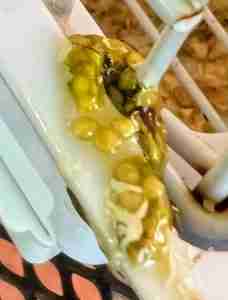
The next morning, I noticed undigested seeds in her poop, and alarm bells went off in my head. Thankfully, I had already scheduled a wellness appointment with my avian veterinarian. What I initially thought would be a routine checkup turned into a quest to uncover a serious health issue!

A few steadfast rules about parrot health are that their poop should not smell, their diet and clean environment are crucial, and their food should always be digested.

Undigested food often points to a few potentially life-threatening issues: liver problems (such as Pacheco’s Disease), kidney issues, PDD (Proventricular Dilation Disease), or AGY (Avian Gastric Yeast).

Of course, undigested food always indicates a problem in the digestive system.

My veterinarian examined Carmen’s weight and keel bone and ruled out PDD. The gram stain test results quickly revealed AGY: a significant overgrowth of yeast, so much so that it was budding, or replicating, in her system.

I was shocked!

If you’ve watched my videos, you know that health and cleanliness are top priorities for my birds. I’m very conscious of what they eat, so I’ve never encountered AGY.

My vet emphasized the severity of Carmen’s yeast infection and suggested that it might be causing other infections. The culture results will confirm this soon, but in the meantime, we began treatment for the yeast.

The Moral of the Story

We love our pets, our companions, and we want to show our love, just like Carmen’s previous owner did.

It turns out that Carmen had been sharing a little toast with jam most mornings. Even though inappropriate foods don’t seem to harm our birds immediately, they can cause issues over time. On the outside, Carmen looked like a healthy, beautiful bird and was affectionate with me initially. However, by the second day, I noticed she was ‘cranky’ and nipped harder than usual—a subtle sign that she wasn’t feeling well.

Her owner mentioned that she had never plucked her feathers before, but recently she had started pulling out her tail feathers. This was another sign that something was wrong. Carmen likely pulled out her tail feathers because she was in pain and was trying to make it go away.

It’s easy to want to spoil our birds, but the greatest love comes from caring for them properly. This includes providing the right diet and showing physical affection by spending time with them and petting them only on the head or neck.

Avoid Feeding Harmful Foods

Feeding Your Parrot: Fresh Foods, Dry Foods, and Pellets

In the wild, parrots eat a wide variety of foods that you may not have access to, but you can still provide a diverse and healthy diet for your feathered friend.

Fresh Foods

Parrots accustomed to variety will enjoy and benefit from various healthy foods. Most of these should be green, similar to what they would eat in the wild. Offer leafy greens and vegetables like broccoli regularly. For their keen eyesight, foods rich in beta carotene, like carrots and sweet potatoes, are excellent choices.

While fruits are high in fructose and parrots haven’t evolved to eat these (they usually eat unripe fruit which lacks the sweetness in the wild), exceptions can be made for fruits like mangos and papayas for the beta carotene.

Sprouted foods are also fantastic for parrots.

Dry Foods

I like to leave some dry food in my parrot’s cages (depending on their species) to complement their core pelleted diet. It offers an alternative that won’t grow bacteria or mold right away, the way fresh foods can.

Millet mixes (sold as a parakeet mix), oatmeal, pumpkin seeds, hemp seeds, chia seeds, and sesame seeds are great options when given in moderation. These can also make excellent treats.

Research is key when it comes to parrot health and diet- be sure to research what you offer so that you do what’s best for your bird.

Pellets

While I’m not the biggest fan of pellets, they offer significant benefits. Several vets and experts have told me that the introduction of commercial pellets for parrots resulted in fewer vet visits. My rescue Yellow-naped Amazon, Lorenza, was on the brink of death due to a seed-based diet that damaged her liver. My vet didn’t think she would survive, but a diet consisting of 99% pellets and fresh foods, including scrambled eggs, has dramatically improved her health. She’s not perfectly “normal,” but it’s been years, and you’d probably never guess she had been so sick if you met her.

Human Junk Food

Prossesed and sweet foods that are considered “junk” food for us are very likley ‘super-junk’ for our parrots. I always wondered why pizza is ill-advised for parrots: then I learned that bread puts candida yeast in a parrot’s system, and that they cheese can too! My vet says that parrot’s love cheese! She’s right!

Caring for Carmen and my other parrots has taught me that a parrot’s happiness starts with their health, and providing a proper diet and environment is the greatest way to care. The best way to show our love for our wonderful companions can be expressed in pets, time and attention given.

Aggressive, Adopted Amazons- Can They Become Adorable Best Pets?

Amazon parrots, often seen as one-person birds, possess a unique blend of independence and aggression. When adopted as adults, these feathered companions might carry emotional baggage from their past. Much like humans, they need time to unravel these complexities, often requiring a significant period, around two years, to heal and rebuild trust.

1. Emotional Space Creating an environment where these adopted amazons are free from coercion and allowed to find their place within a caring family is pivotal. Patience becomes the cornerstone; letting them be themselves, providing love, and nurturing a safe space for them to flourish is crucial to their recovery. This approach facilitates their journey of healing, gradually reinstating trust in human interactions.

To aid in the healing, I like to allow them as much cage-open time as possible, time when their door is open and they can come out or stay in, giving them the power of choice. A person or parrot with choice automatically feels different. They start to learn that there is more love and respect, allowing them relax and trust more so.

Amazing Amazons Despite their loud nature, amazons make incredible pets. Their loyalty surpasses that of many other parrot species. Once they establish trust, they become steadfast companions, always by your side. Their dedication and unwavering presence create a bond that resonates with their owners, making them cherished members of the family.

2. Time The journey with an adopted amazon is an evolution—a process where time, love, and understanding intersect. It’s a testament to the resilience of these birds, showcasing their capacity to adapt, heal, and form unbreakable bonds with those who offer patience and compassion.

3. Environment Try different things, like giving your Amazon the companionship of another parrot or at least the sounds from music or videos. Hearing other parrots provides a feeling of safety and comfort. Provide palm plants, a place for your Amazon to hide when they feel unsafe, a natural “toy” that they can chew and play with.

Every parrot wants to belong to a flock, just like we, as people, want to belong to a tribe. Just the same, parrot or creature, needs to be loved and respected. Provide these and, in time, your parrot will work through their issues. Their aggression will turn to adorableness, when you are patient and understanding. This doesn’t mean that anyone should get hurt (not the people at home or the Amazon parrot); it means that inappropriate behavior should be ignored. Positive behavior should be praised. When this is the case, your adopted, aggressive Amazon parrot will become one of the best pets or birds you’ll have.