
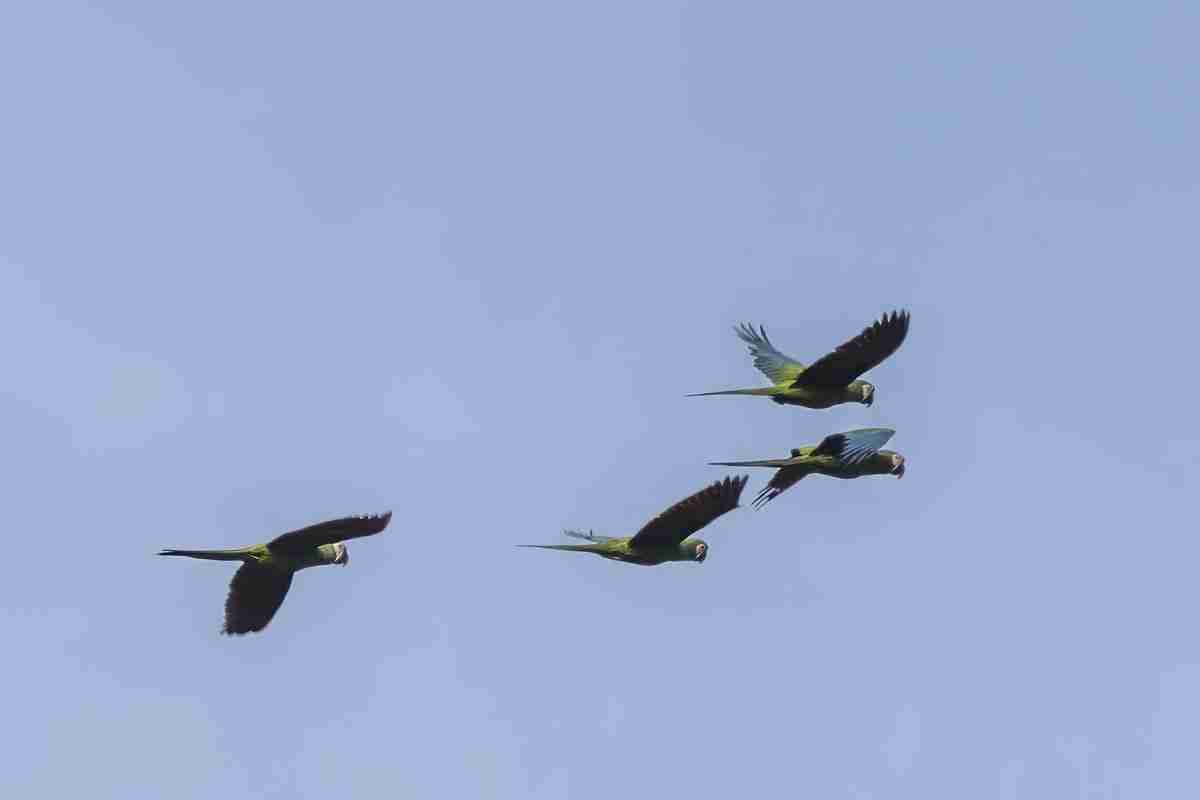
Severe Macaw
The mini macaw with full macaw personality — practical for normal homes, demanding for normal owners
Origin
South America (eastern Panama south through Amazon basin to Bolivia and Brazil)
Lifespan
30-50 years
With proper nutrition & care
Size
17-20 inches (43-51 cm)
350-450 g (12-16 oz)
Quick Facts
| Origin | South America (eastern Panama south through Amazon basin to Bolivia and Brazil) |
|---|---|
| Size | 17-20 inches (43-51 cm) |
| Weight | 350-450 g (12-16 oz) |
| Lifespan | 30-50 years |
| Care level | Intermediate |
| Noise level | Loud relative to body size. Calls carry across a single property; manageable in detached single-family homes, marginal in townhouses, generally not realistic for apartments. |
| Talking ability | Moderate. Many birds learn 15 to 30 words and household sounds with reasonable clarity. |
| Beginner-friendly | 4/10 |
The Bird
Severe Macaw at a Glance
The Severe Macaw, also known as the Chestnut-fronted Macaw, is the largest of the so-called "mini macaws" and one of the most underrated parrots in the pet trade. Adults stand 17 to 20 inches from beak to tail tip, weigh roughly 350 to 450 grams, and carry deep green plumage with a chestnut forehead patch, blue flight feathers, and bare white facial skin marked with thin lines of feathers. They give you a real macaw experience, the personality, the playfulness, the intelligence, the dramatic body language, in a body small enough to live in a normal home.
Compared to the large macaws on this site, the Severe is dramatically more practical. Cage space requirements are reasonable, the noise level is significant but not neighborhood-clearing, the lifespan is long but not generationally so (30 to 50 years), and the upfront cost is a fraction of a Scarlet or Green-winged. For someone who has dreamed of owning a macaw but lives in a typical suburban house, the Severe is often the realistic answer.
That said, "mini" is relative. The Severe is still a 20-inch parrot with a powerful beak, strong opinions, and serious commitment requirements. It is not a beginner bird and not a casual pet. Kalyn places Severe Macaws with intermediate-level bird owners who already have experience with smaller parrots and understand what 30+ years of macaw ownership actually involves.
Severe Macaws are full of personality in a way that distinguishes them sharply from larger, more reserved species. They are clowns, in the best macaw sense, prone to playful antics, hanging upside down off perches, throwing toys, and engaging their people in interactive play sessions that last as long as the human is willing to participate. Owners often describe Severes as having "more personality per pound" than any other macaw, and the description holds up. Where a Green-winged offers calm steadiness, the Severe offers active engagement and a sense of humor.
That same energy can become demanding without proper outlets. A Severe that gets fed and ignored will scream for attention more readily than a larger macaw, and the species can develop attention-seeking behaviors (excessive vocalization, feather damaging, cage bar chewing) faster than most parrots if it feels neglected. Plan for at least two hours of direct social engagement daily plus access to varied enrichment, and the species rewards the investment with one of the most genuinely interactive parrot relationships in captivity.
Severes can be selective bonders, though typically less intensely than Scarlets. Many bond strongly with a primary person while remaining tolerant of the broader household, particularly if early socialization included consistent handling from multiple family members. The species is generally good with calm older children and adults; younger children who move quickly or grab at the bird will get warned and eventually bitten, and the warning bites are sharp enough to teach respect quickly. Supervision is mandatory.
Vocalization & Talking
Severe Macaws are loud relative to their body size, though significantly quieter than any of the large macaws. Their calls have the same deep macaw tonality but at lower volume, and they carry across a single property rather than across a neighborhood. The species follows the typical parrot rhythm of dawn and dusk peaks with intermittent calls during the day when excited, demanding attention, or alarmed. Most owners describe the noise as manageable in a single-family detached home with average insulation, marginal in townhouses with adjacent neighbors, and problematic in apartment buildings.
The species also produces a characteristic harsh, scratchy contact call that owners either find endearing or grating depending on temperament. Daily exposure tends to normalize the sound, but visitors will notice it.
On talking, Severes are decent moderate talkers. Many birds learn 15 to 30 words and short phrases with reasonable clarity, and the species has a slight reputation for picking up household sounds (microwave beeps, doorbells, phone ringtones) faster than vocabulary words. Talking ability varies widely between individuals, and the species should not be chosen primarily for its speech potential.
Diet
Build the daily diet around a high-quality formulated pellet such as Harrison's, TOPs, or Roudybush at roughly 60 to 65 percent of intake. The Severe Macaw has dietary needs closer to a medium parrot than to a Scarlet or Hyacinth, and the high-fat seed and nut diets sometimes recommended for large macaws are inappropriate for this species. An all-seed Severe develops the standard parrot consequences: vitamin A deficiency first, then poor feather quality, then respiratory vulnerability, eventually fatty liver disease.
Fresh vegetables should make up 20 to 25 percent of intake. The high-value foods are dark leafy greens (kale, Swiss chard, romaine, dandelion), sweet potato, butternut squash, bell peppers, broccoli, carrot, and snap peas. Cooked legumes (lentils, chickpeas) work well as a protein source two or three times a week. Fruits in modest amounts, primarily berries, apple, melon, and papaya, round out the plate; the Severe enjoys fruit but the sugar load adds up quickly in a smaller bird.
Nuts work well as training treats and enrichment, but in moderation: one or two in-shell almonds, walnuts, or pecans daily is appropriate for an adult Severe. Brazil nuts and macadamias should be occasional treats rather than staples given the species' lower fat requirement. Provide fresh water daily and replace it the moment the bird fouls the bowl. Avocado, chocolate, caffeine, alcohol, onion, garlic, and salty human food remain off-limits as for all parrots.
Health & Lifespan
A well-kept Severe Macaw lives 30 to 50 years in captivity. Establishing care with a board-certified avian vet through the Association of Avian Veterinarians directory in the first month is essential, and annual wellness exams with full bloodwork every two to three years should be a standing appointment.
The two health concerns most commonly seen in this species are Proventricular Dilatation Disease (PDD), a viral neurological condition that requires careful quarantine and testing of any new bird before introduction to existing flocks, and feather damaging behavior, which in Severes is often the behavioral consequence of inadequate enrichment, social neglect, or sudden routine changes. The species' high social and intellectual needs make it particularly susceptible to stress-driven plucking, and once established the behavior is genuinely difficult to reverse. Prevention through stable routine, consistent daily engagement, and varied enrichment is the only reliable approach. Weekly weigh-ins on a kitchen scale catch most other developing health issues early.
Housing
Minimum cage dimensions are 36 inches wide by 24 inches deep by 48 inches high with 1 inch bar spacing in powder-coated steel. A 40-inch-wide flight cage is a meaningful upgrade and the better baseline for a Severe that will spend significant daytime hours inside. The species is more active and aerial than its size suggests, and horizontal space matters more than total cage volume.
Equip the cage with three to four perches of varying diameter and material, including natural manzanita and a flat platform perch for foot health, plus a constantly rotating set of shreddable wood toys, foraging puzzles, and foot toys. Severes are enthusiastic chewers and burn through cardboard, soft pine, and palm fiber daily. Place the cage in a social room well away from the kitchen; non-stick cookware fumes are acutely fatal to all parrots, and the precaution is non-negotiable regardless of bird size.
Plan for 3 to 4 hours of supervised out-of-cage time daily. The species needs that time to climb, fly within safe limits, chew, and engage with its people. Severes work in single-family detached homes and are marginal in townhouses; apartments are typically not appropriate because of the noise level and the activity needs of the species.
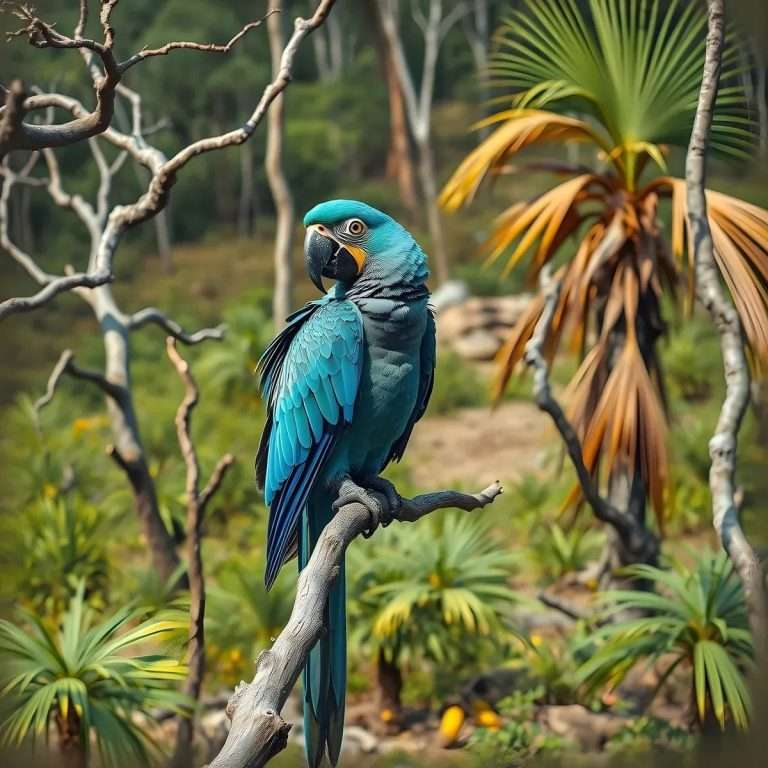


Frequently Asked Questions
- Is the Severe Macaw a good beginner parrot?
Not really. The Severe is one of the more practical macaws to live with, but it is still a 20-inch parrot with strong opinions, a 30-to-50-year lifespan, and the social and enrichment demands characteristic of the macaw family. Kalyn places this species with intermediate-level bird owners who already have meaningful experience with smaller parrots and understand the long-term commitment involved.
- How loud is a Severe Macaw compared to a Blue and Gold?
Significantly quieter. The Severe's calls have the same deep macaw tonality but at substantially lower volume; they carry across a property rather than across a neighborhood. A Severe is generally workable in a detached single-family home where a Blue and Gold or Green-winged would not be.
- Can a Severe Macaw live in a townhouse or condo?
Marginal in townhouses depending on construction and neighbor tolerance, generally not realistic in condos or apartments. The dawn and dusk calls carry through shared walls, and the species' activity level produces ambient noise throughout the day. Detached single-family housing is the safer assumption.
- Why are Severe Macaws called 'mini macaws'?
The term covers the smaller macaw species (Severe, Yellow-collared, Hahn's, Noble, and others) that share the macaw body plan and personality but at roughly one-third the size of a Scarlet or Blue and Gold. The Severe is the largest of the minis and the closest in personality to a full-sized macaw, which is why it is sometimes called the 'starter macaw' in the avian community.
- Will a Severe Macaw bond to one person?
Often yes, though typically less intensely than a Scarlet. Many Severes bond strongly with a primary person while remaining tolerant of the broader household, particularly if early socialization included consistent handling from multiple family members. Selective bonding becomes more pronounced at sexual maturity (4 to 5 years) and benefits from active management through that period.